
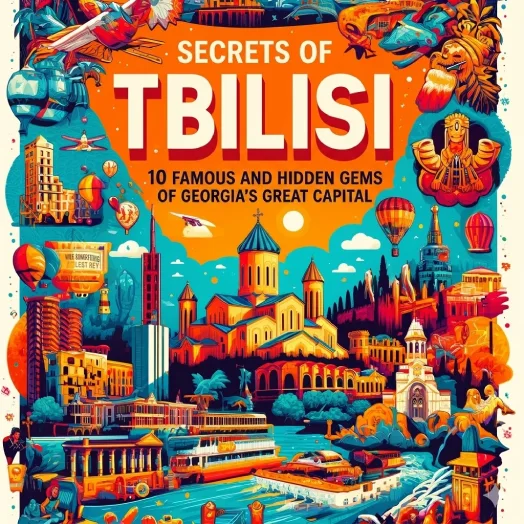
Tbilisi, the heart of Georgia, is a city where ancient stone walls whisper legends to futuristic glass structures. It’s a place where you can lose yourself in a labyrinth of carved wooden balconies only to find yourself at a trendy techno club or a quiet 4th-century church.
In this guide, we reveal 10 locations that define the soul of Tbilisi — from the postcard-perfect icons to the quiet corners hidden in plain sight.
1. Narikala Fortress: The Silent Guardian
Perched on a steep hill overlooking the Mtkvari (Kura) River, Narikala is the ancient citadel of Tbilisi. Established in the 4th century as a Persian citadel, it has survived earthquakes and invasions.
- Pro Tip: Take the cable car from Rike Park for the view, but walk down the narrow paths by foot to discover hidden viewpoints and the botanical garden entrance.
2. Abanotubani: The Birthplace of the City
Legend has it that King Vakhtang Gorgasali decided to build the capital here after his falcon fell into a hot sulfur spring. The brick-domed Sulfur Baths are not just a spa; they are a piece of living history.
- Don’t Miss: The Orbeliani Bathhouse with its stunning blue mosaic facade — it looks like a piece of Isfahan in the middle of Georgia.
3. Metekhi Church: History on a Cliff
Standing boldly on a cliffside, Metekhi Church and the statue of King Gorgasali offer the most iconic view of Old Tbilisi. This site has been destroyed and rebuilt many times, symbolizing the resilience of the Georgian spirit.
4. Rike Park and the “Dancing” Fountains
Rike Park is the futuristic face of the city. With its giant silver “tubes” (the Concert Hall) and the Peace Bridge, it’s a favorite spot for evening strolls.
- The Experience: At night, the fountains come alive with music and lights, creating a magical contrast with the illuminated fortress above.
5. Mtatsminda Panthenon & St. David’s Church (Mama Daviti)
Halfway up Mount Mtatsminda lies a place of deep peace. St. David’s Church is surrounded by the Pantheon, where Georgia’s most beloved writers, artists, and heroes are buried. The view of the city from here is more intimate and quiet than from the very top.
6. Gabriadze Theater: The Clock Tower of Dreams
The Gabriadze Puppet Theater looks like something out of a fairy tale. Its leaning clock tower, built from salvaged bricks, features a small angel that strikes the bell every hour.
- Hidden Gem: Look for the world’s smallest cafe nearby, also designed by Rezo Gabriadze.
7. Aghmashenebeli Avenue: The Parisian Vibe
Located on the left bank, this avenue features stunning European-style architecture from the 19th century. The pedestrian part (New Tiflis) is lined with vibrant cafes, wine bars, and flower shops, making it perfect for people-watching.
8. Kashveti Church: A Masterpiece of Art
Located on Rustaveli Avenue, Kashveti Church is famous for its incredible frescoes. The altar was painted by the renowned Georgian artist Lado Gudiashvili, and the art is considered revolutionary for its time.
9. The Museum of Shota Rustaveli
To understand Georgia, you must know Shota Rustaveli, the 12th-century poet who wrote The Knight in the Panther’s Skin. This museum is a deep dive into the philosophy, chivalry, and literature that formed the Georgian identity.
10. Sololaki: The Museum of Living Architecture
Sololaki is where the wealthy merchants of the 19th century built their mansions. Today, it’s a district of “faded grandeur.”
- What to look for: Look for open doorways (paradnye). Inside, you’ll often find hand-painted ceilings, marble stairs, and the famous “Italian courtyards” where neighbors still share coffee and news.
Conclusion
Tbilisi is not a city you simply visit; it’s a city you feel. Whether you are soaking in sulfur water, climbing ancient ruins, or sipping wine in a Sololaki courtyard, the “Secrets of Tbilisi” will stay with you long after you leave.
Support the Author
If this article was useful to you or gave you food for thought, you can support the development of my projects. Share the link to this text on your social networks—it will help the blog grow. And if you have a desire to support the author financially, you can send a voluntary donation for the development of the blog. Every bit of support gives me more time and energy to create new, deep materials. Thank you for being with me!