
Meditation for Beginners: Your Guide to a Calmer Mind & Better Health
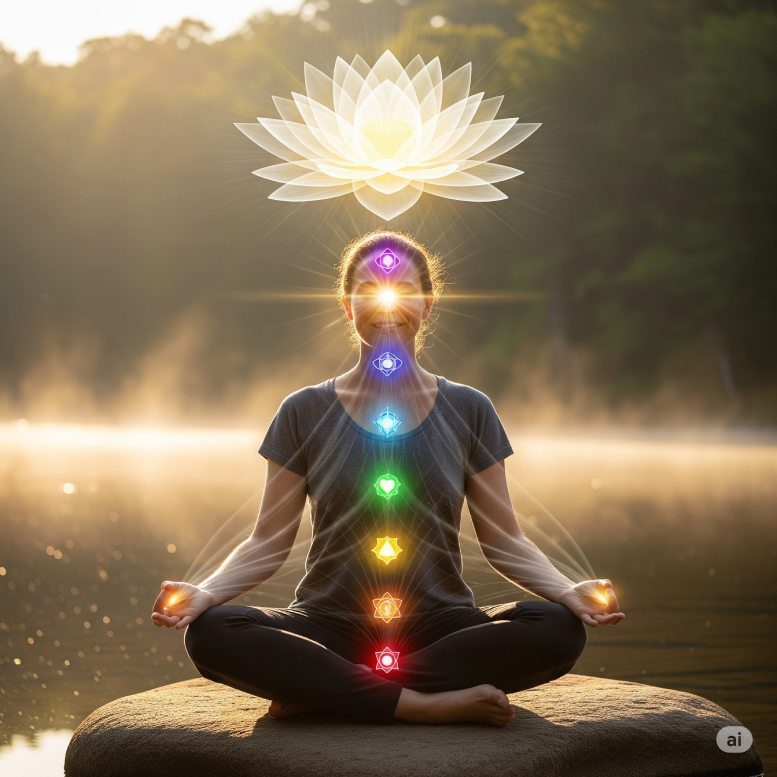
As you might have noticed from my previous article on a spiritual journey to India, I’m gradually starting to write about travels across our wonderful planet Earth. But in this article, I’m once again touching on the topic of health, specifically meditation and the meditative state. I’ll share a few meditations that I do myself and find truly helpful.
I see meditation as a real, practical way to overcome the chaos of thoughts, relieve stress, and find peace. In my articles, I don’t just tell you what meditation is; I try to show how it can change the life of someone who is seeking harmony, balance, and who is trying to understand and improve their health—both physical and mental.
A Journey into the Meditative State
What is meditation? For some, it’s a way to relax after a long day; for others, it’s a tool for finding answers to profound questions; and for a third group, it’s just something mysterious. We tend to think of meditation as something that yogis do in the mountains, but in reality, it’s an accessible tool for everyone.
Let’s break down the meditative state from two different perspectives: the scientific and the spiritual.
Important: Always perform these meditative practices in a safe place, such as at home on your couch or in a chair. Never meditate while driving or performing any activity that requires your full attention.
The Scientific View: The State of the Brain and Body
From a scientific standpoint, meditation is a conscious training of attention that leads to significant physiological and psychological changes. It transitions the brain from a state of beta waves (active, wakeful thought) to calmer states, such as alpha waves (relaxation and calm), and even theta waves (deep relaxation and creativity).
During meditation, the following occurs:
- Your brain slows down. Activity in the areas responsible for anxiety and stress (for example, the amygdala) decreases. At the same time, activity in the prefrontal cortex—which is responsible for attention and decision-making—increases. This helps you better control your emotions and thoughts.
- Cortisol levels drop. This is the stress hormone responsible for the “fight or flight” response. Lowering its levels leads to a reduction in anxiety and tension.
- The mind-body connection strengthens. It’s scientifically proven that meditation improves the function of the immune system, lowers blood pressure, and helps with chronic pain. This happens because you learn to better “listen” to your body.
Meditation is not supernatural; it’s a neurophysiological process. Think of it as “fitness for the brain” that helps it work more efficiently and calmly.
The Spiritual View: A Path to Self-Discovery
From a spiritual and personal growth perspective, meditation is much more than just relaxation. It’s a tool for achieving an altered state of consciousness and getting to know your true nature.
- A journey into the subconscious. In a meditative state, a person is able to delve into their subconscious to find answers that are hidden from the conscious mind. It’s like looking “inside yourself.”
- Connecting with a higher self. Many spiritual teachings say that meditation allows you to connect with your “higher self,” “universal consciousness,” or “source.” This is a state of deep peace and harmony where the feeling of separateness disappears.
- Energy work. In many spiritual practices, meditation is believed to help manage the flow of energy in the body, open energy centers (chakras), and cleanse your aura. This leads not only to spiritual growth but also to physical well-being.
In this context, meditation is not just a technique but a way of life that helps you gain wisdom and inner strength.
Meditation in Practice: Simple Techniques for Beginners
Among the vast number of meditative practices, I’d like to share two techniques that are particularly close to me and that I use in my daily life. They are simple, effective, and provide quick results.
1. The Wim Hof Method: Breathing for Body and Mind
The Wim Hof breathing method is a powerful practice that helps oxygenate the body and quickly enter a meditative state. It is based on three steps:
- Intensive breathing. Take 30-40 deep breaths in and full, but rapid, breaths out. Imagine filling your lungs all the way down to your belly, then releasing the air without tension. This may cause slight dizziness or tingling, which is a normal reaction.
- The breath hold. After your final exhale, hold your breath for as long as is comfortable. In this moment, your body is at its most relaxed and your mind transitions to a calm state.
- The recovery breath. Take one deep breath in and hold it for 15 seconds, then slowly breathe out.
Repeat this cycle 3-4 times. This practice not only clears your mind but also helps you cope with stress, boosts energy, and improves concentration. You can read more about it on the official Wim Hof website: wimhofmethod.com.
2. The Silva Method: Countdown for Your Mind
The Silva Method is one of my favorite techniques, especially before bed. It is based on a countdown and visualization to reach the alpha state, which is ideal for relaxation and programming the mind. According to the book, counting from 10 to 1 is an advanced level. I use a countdown from 100 to 1, and most of the time, I fall asleep somewhere around 70.
It’s an amusing feeling when you suddenly realize you’re starting to fall into a void, and in a moment, you’re already asleep. It helps me fall asleep quite quickly.
This meditation not only relaxes you but also teaches you how to enter a state of deep peace. In this state, according to the method, you can practice visualization to solve problems or achieve goals. You can learn more about the technique and its benefits in the book “The Silva Mind Control Method” by José Silva.
These two practices are just a small part of the vast world of meditation. They prove that you don’t need complex rituals to achieve harmony. All it takes is to start with a few simple steps. For example, there are also highly effective mindfulness meditations that help you gradually overcome the endless stream of thoughts in your head.
In Conclusion
The meditative state is a unique phenomenon where scientific and spiritual perspectives do not contradict but complement each other. It is a tool that allows you to rise above the noise and chaos of daily life to truly hear yourself. It’s not a mystery, but a time-tested way to find harmony, strengthen your health, and gain clarity of thought.
Ultimately, meditation is a journey. A journey not to another country, but within yourself, to your true self. And you can start this journey today without ever leaving home.
The links to the authors are not an advertisement but a sign of our gratitude and respect for their genius and the immense work they put into their methods.
If you liked this article, please share the link with your friends on social media. Your support helps me create more quality content. You can also support the author by making a donation to help this project grow so I can continue to share interesting and valuable stories.




 Support our blog! Buy us a coffee, and we'll show you the world! ☕🌍 We need your help! Even a small amount will help us continue to delight you with interesting travel articles. Thank you for your support! 💖