
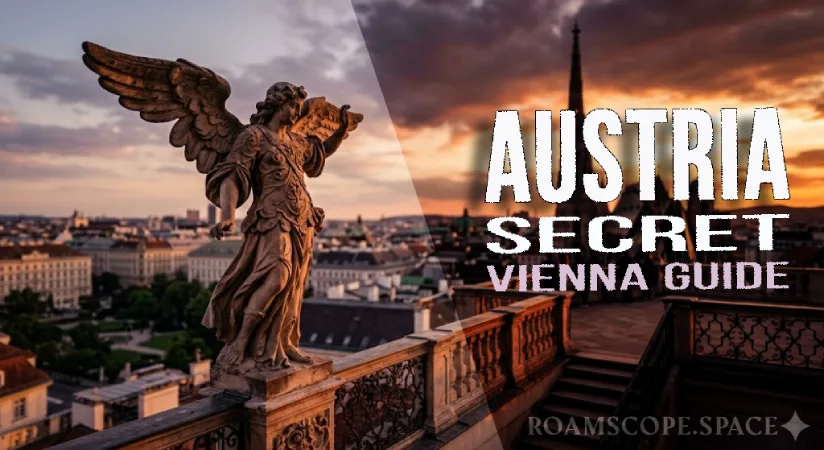
Vienna is a city of layers. Beyond the famous opera houses and the crowded corridors of the Hofburg lies a city that breathes through secret courtyards, avant-garde galleries, and century-old traditions that remain untouched by mainstream tourism.
This guide is designed for the curious explorer who seeks to understand the true character of the Austrian capital. Here are 15 deep-dive locations and experiences that define the authentic Viennese soul in 2026.
1. The State Hall of the Austrian National Library (Prunksaal)
This is not merely a library; it is an architectural masterpiece of the High Baroque. Completed in 1723, the State Hall houses over 200,000 volumes, including the massive collection of Prince Eugene of Savoy.
- Insider Tip: Look up at the central dome to see Daniel Gran’s frescoes, which represent the apotheosis of Emperor Charles VI. Unlike the modern reading rooms, this hall feels frozen in time. Visit during the late afternoon when the sunlight hits the gold-leafed bindings of the ancient books.
2. The Tiered Belvedere Gardens
While the Upper Belvedere attracts crowds for Klimt’s “The Kiss,” the gardens themselves are a marvel of formal French landscaping. Designed by Dominique Girard (a student of Le Nôtre, who designed Versailles), the gardens are structured with cascading fountains and sphinxes representing the four elements.
- Deep Detail: The gardens were designed to be a “path of life,” ascending from the Lower Belvedere (Earth) to the Upper (Heaven). Walking upward offers a legendary view of Vienna’s skyline, perfectly framed by the Baroque architecture.
3. ZOOM Children’s Museum at MuseumsQuartier
Located in the heart of the vibrant MQ, ZOOM is widely considered one of the best children’s museums in Europe. It is divided into zones: the “Ocean” for toddlers, the “Studio” for workshops, and an animated film studio for teenagers.
- Why it’s unique: It focuses on hands-on sensory learning. It’s a place where children are encouraged to question everything—from how the human body works to the ethics of modern technology.
4. Collection of Ancient Musical Instruments (Hofburg)
Vienna is the global capital of classical music, but to understand its roots, you must see the tools of the trade. This collection is part of the Kunsthistorisches Museum and features instruments played by the giants: Mozart, Haydn, and Beethoven.
- Insider Tip: You can see the “Fortepianos” that defined the transition from the harpsichord to the modern piano. The museum often provides audio guides that let you hear the specific timbre of these centuries-old instruments.
5. Schloss Ottakring (The Fairy Tale Outpost)
Located in the 16th district, this small castle—often called the Wilhelminenberg Palace—offers a stark contrast to the massive imperial palaces of the center. It sits on the edge of the Vienna Woods (Wienerwald).
- The Experience: Come here for the sunset. The view from the meadow in front of the palace is one of the most romantic in the city, overlooking the entire basin of Vienna without the tourists of the Kahlenberg.
6. Gumpendorfer Street & Market Vibe
The Gumpendorfer Straße is the backbone of the 6th district. It’s an eclectic mix of high-end furniture design shops, gritty bars, and local markets.
- The Vibe: This is where the creative class lives. Skip the tourist traps and visit the small bakeries here. You’ll find the authentic “Kaffeehaus” culture surviving in corners like Cafe Sperl, which hasn’t changed its interior since 1880.
7. The Maze and Labyrinth of Schönbrunn
While millions visit the palace, only a few venture deep into the Maze (Irrgarten). This is a reconstruction of the original 1720 design.
- Fun Fact: There is a specific mathematical logic to solving the maze. Once you reach the center, you are rewarded with a viewing platform to watch others struggle below. It’s also home to a giant stone kaleidoscope that turns the garden’s colors into art.
8. MUMOK – The Dark Heart of Art
The Museum of Modern Art (MUMOK) is housed in a massive, windowless building made of dark volcanic basalt. It stands as a defiant contrast to the imperial white buildings surrounding it.
- Deep Content: The collection ranges from Pop Art (Warhol) to the controversial Vienna Actionism. It’s a museum that challenges you, often hosting temporary exhibitions that dive into the darker, more psychological aspects of human history.
9. The Romantic Danube Canal (Donaukanal)
This isn’t the “Blue Danube” of the waltzes; it’s a living gallery of street art. The canal walls are the only place in Vienna where graffiti is legal and encouraged.
- The Experience: Take a long walk starting from Schwedenplatz. You will pass by “Tel Aviv Beach” and “Strandbar Herrmann,” where sand is imported every summer to create an artificial beach. It’s the city’s urban playground.
10. Open-Air Cinema (Kino unter Sternen)
During the summer months, the squares of Vienna transform into cinemas. The most prestigious is the Music Film Festival at Rathausplatz, but for a more local feel, look for mobile cinemas in the Karlsplatz area.
- The Vibe: Locals bring blankets and picnic baskets. Watching an old black-and-white film against the backdrop of a Baroque church is an experience you won’t find in any commercial theater.
11. The Gersthof District (The Hidden 18th)
Gersthof is a quiet, wealthy pocket of the 18th district. It’s filled with “Cottage Viertel” houses—grand villas with sprawling gardens.
- Why Visit: It offers a glimpse into the life of the Viennese elite from the late 19th century. Stroll through the Türkenschanzpark nearby, which contains a beautiful observation tower (Paulinenwarte) and unique botanical species.
12. Spittelberg: The Village in the City
Spittelberg was once a disreputable suburb, but today its narrow, cobblestone Biedermeier lanes are some of the most expensive real estate in Vienna.
- The Secret: Explore the inner courtyards. Many of the houses have “Durchhäuser” (walk-through houses) that connect one street to another. It’s especially magical during the Christmas market, which focuses on local crafts rather than mass-produced trinkets.
13. Demel: The Confectionery of Kings
Demel was once the purveyor to the Imperial and Royal Court. Unlike the Sacher Hotel, which is a massive operation, Demel still feels like a boutique workshop.
- Pro Tip: Walk to the back of the shop to see the glass-walled kitchen. You can watch the “Kuchenbäcker” (cake bakers) hand-stretch strudel dough until it is thin enough to read a newspaper through. Order the Anna Torte or the Sacher Torte with a side of unsweetened whipped cream (Obers).
14. Rooftop Serenades & Secret Views
As the city limits its height to preserve views of the Cathedral, the few rooftop bars that exist are spectacular.
- Where to go: Visit Lamée Rooftop for a direct, eye-level view of the colorful roof tiles of St. Stephen’s Cathedral. At night, the lighting makes the Gothic architecture look like a theater set.
15. Karlsplatz Metro Gallery
The metro station at Karlsplatz is a junction of history. It houses the Otto Wagner Pavilions (Art Nouveau masterpieces) and, underground, a permanent art space.
- What to see: The “Pi” installation by Ken Lum is a long wall of LED numbers representing global statistics (population growth, books published, etc.) in real-time. It turns a boring transit walk into a philosophical reflection.
Where to Stay: 2026 Recommendations
- The Ritz-Carlton, Vienna: Located on the historic Ringstraße, this hotel is a masterpiece of hospitality. It is composed of four 19th-century palaces. The atmosphere is imperial but with high-tech 2026 comforts.
- Vienna Residence Apartments: Perfect for those who want to live like a local. These luxury apartments are located in historic buildings but feature minimalist, modern interiors.
Your Travel Budget for 2026
Vienna has seen a shift towards premium tourism. Here are the average costs:
- Accommodation: Expect to pay €200 – €550 per night for high-quality central lodging.
- Fine Dining: A full meal with wine in a reputable restaurant will range from €40 – €80 per person.
- Daily Essentials: Groceries at Billa Plus or Spar Gourmet are high-quality. A basket of local goods will cost around €30 – €50.
Support the Author
If you found this guide valuable, please consider a donation to support the author’s work and the development of future content.
Share this Article
Please share a link to this article with your friends or on social media to help others discover the hidden side of Vienna.