
France remains the world’s top travel destination because it offers a layered experience: you can touch Roman stones in the morning and dine in a futuristic skyscraper by evening. However, the “City of Light” and the lavender fields of Provence require careful planning. In this 2026 update, we provide the depth you need to navigate France like a pro.
🏛️ The Icons: Deep Dive into France’s Top 20 Sights
The Paris Powerhouses
- Eiffel Tower: Beyond just looking at it, book tickets for the “Jules Verne” restaurant or the summit at least 2 months in advance. In 2026, security perimeters are tight, so allow 45 minutes just for entry.
- Louvre Museum: With 35,000 objects, it’s impossible to see all in a day. Focus on the Denon Wing for the Mona Lisa and Italian masters, or the Sulley Wing for Egyptian antiquities.
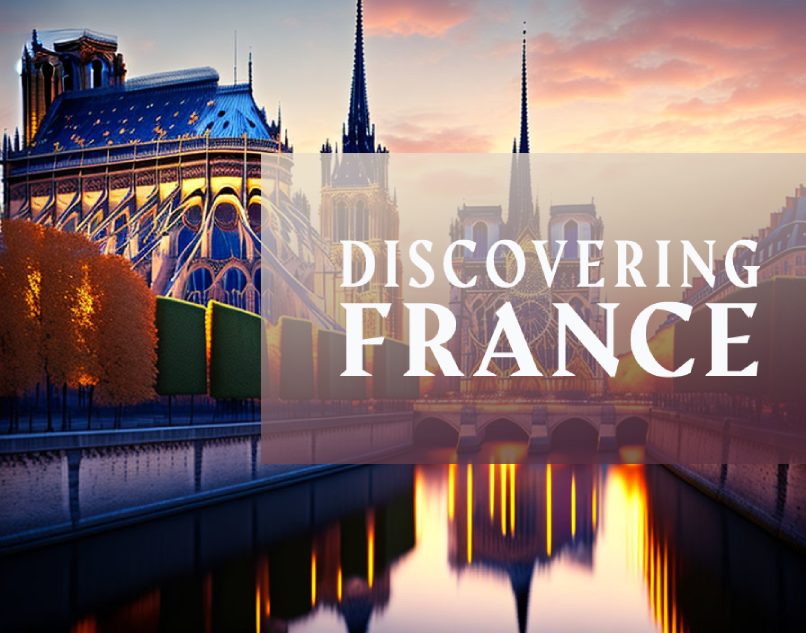
- Notre-Dame Cathedral: After the massive restoration, the cathedral has reopened with a stunningly bright interior. The new archaeological crypt under the square is a must-see for history buffs.
- Sainte-Chapelle: Located within the Palais de Justice, this chapel contains some of the highest-quality 13th-century stained glass in the world. Visit on a sunny day for the full “jewel box” effect.
- Sacré-Cœur Basilica: Perched atop Montmartre. While the church is beautiful, the real draw is the surrounding artist square (Place du Tertre) and the view of Paris at sunset.
Royal Grandeur & Historical Echoes
- Palace of Versailles: Don’t just see the Hall of Mirrors. Spend time in the Hameau de la Reine, Marie Antoinette’s private rustic retreat, which feels like a fairy-tale village.
- Mont Saint-Michel: This tidal island in Normandy is magical. Pro tip: Stay overnight on the island after the day-trippers leave to experience the medieval silence.
- D-Day Beaches: Visit Omaha Beach and the American Cemetery at Colleville-sur-Mer. It is a somber, impeccably maintained site that provides deep insight into WWII history.
- Château de Chambord: The largest castle in the Loire Valley, famous for its double-helix staircase (reportedly designed by Leonardo da Vinci) and its 128-meter facade.
- Carcassonne: A double-walled medieval fortress. It’s a “living” city where people still reside within the ancient stone towers. Best seen illuminated at night.
Cultural & Natural Wonders
- Palace of the Popes (Avignon): The largest Gothic palace in the world. It served as the seat of Western Christianity in the 14th century.
- Pont du Gard: This ancient Roman aqueduct is a marvel of 1st-century engineering. You can actually swim in the Gardon River right underneath it.
- Musée d’Orsay: Housed in a former railway station, it holds the world’s largest collection of Impressionist art (Monet, Renoir, Degas).
- Gorges du Verdon: Often called the “Grand Canyon of Europe.” Rent a turquoise pedal boat at the Galetas Bridge to enter the canyon from the water.
- Côte d’Azur (The Riviera): From the luxury of Cannes to the old-world charm of Nice’s Promenade des Anglais. Use the coastal train to hop between towns for just a few euros.
- Les Baux-de-Provence: A ruined fortress-village. Don’t miss the Carrières des Lumières nearby—a massive underground art show projected onto stone walls.
- Chartres Cathedral: Famous for its “Chartres Blue” stained glass. It is considered one of the most authentic Gothic cathedrals, as most of its original 13th-century glass survived.
- The French Alps (Chamonix/Mont Blanc): Take the Aiguille du Midi cable car to 3,842 meters for a view across the peaks of France, Italy, and Switzerland.
- Calanques of Marseille: Limestone cliffs forming narrow, bright blue inlets. You have to hike for about an hour to reach the best ones, like En-Vau.
- Puy de Dôme: A dormant volcano in the Massif Central. A panoramic rack railway takes you to the top for views of the chain of 80 extinct volcanoes.
💰 2026 Cost Guide: No Surprises
| Category | Budget (Daily) | Mid-Range (Daily) | Luxury (Daily) |
| Accommodation | €35 (Hostel) | €180 (Boutique) | €500+ (5-Star) |
| Meals | €25 (Bakeries) | €60 (Bistros) | €150+ (Michelin) |
| Transport | €15 (Metro/Walking) | €40 (Trains/Uber) | €150 (Private Car) |
| Total | €75 – €90 | €280 – €320 | €800+ |
🏨 Expert Accommodation Advice
- The “Le Marais” Hack: In Paris, don’t stay in the 1st district (too touristy). The 3rd and 4th (Le Marais) offer historic vibes, better bars, and are still walkable to the Louvre.
- The “Gîtes de France”: For the countryside, search for “Gîtes.” These are certified holiday homes, often in renovated farmhouses, offering way more value than hotels for families.
- Booking 2026: Post-pandemic tourism is at an all-time high. For summer travel, book your accommodation at least 6 months ahead.
🥐 The Gastronomy Cheat Sheet
- The Bakery Rule: If a bakery doesn’t have the “Artisan Boulanger” sign, they might be using frozen dough. Look for the sign for real, handmade baguettes.
- Dining Times: Lunch is strictly 12:00–14:00. Dinner starts at 19:30. Most kitchens close by 21:30 outside of Paris.
- Tipping: In France, service is included (service compris). Tipping is not mandatory, but leaving €1–€2 for good service at a cafe is a nice gesture.
Conclusion
France is a country that rewards the curious. By stepping beyond the Eiffel Tower and exploring the volcanic peaks of Auvergne or the medieval streets of Carcassonne, you experience a richness that short guides miss. Plan for the costs, but leave room for the unexpected “magic moments” that only France can provide.
Support the Author
If this article was useful to you or gave you food for thought, you can support the development of my projects. Share the link to this text on your social networks—it will help the blog grow. And if you have a desire to support the author financially, you can send a voluntary donation for the development of the blog. Every bit of support gives me more time and energy to create new, deep materials. Thank you for being with me!