
Moving to Georgia 2026: The Ultimate Guide to 1% Tax, Safety & Costs
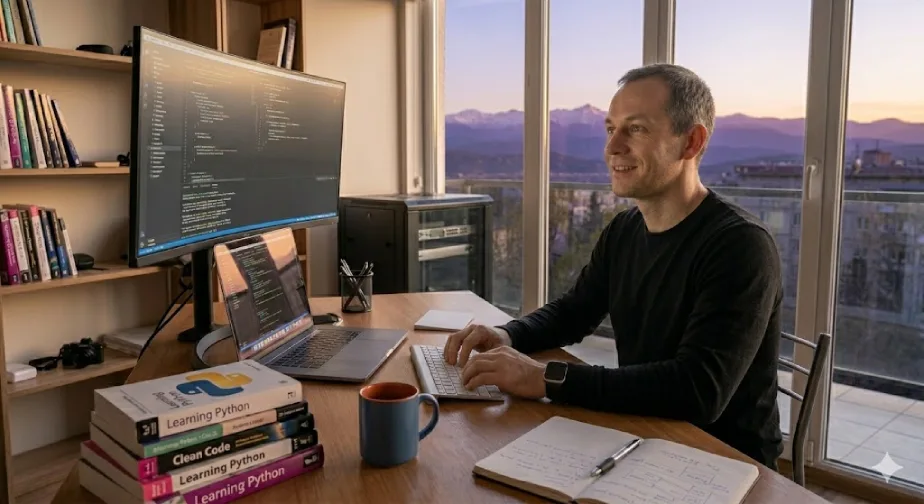
Why is Georgia in the Spotlight Again?
The world in 2026 has fundamentally changed. The concepts of “remote work” and “digital independence” are now permanent pillars of the global economy. However, the freedom to work from anywhere has brought new challenges: skyrocketing taxes across Europe, increasingly complex bureaucracy in once-popular hubs, and a heightened global demand for personal safety.
In this shifting landscape, Georgia has executed a brilliant strategic maneuver. While other nations were closing their doors or tightening the rules, Tbilisi and Batumi were systematically building an infrastructure for those who prioritize three things: low taxes, high safety, and an affordable yet high-quality lifestyle.
This article is more than just a tourist overview. It is a deep dive for those considering Georgia as a primary residence, a business hub, or a reliable “Plan B.” We will break down everything: from the cost of renting an apartment with private parking to the reasons why you can walk through Tbilisi at night with expensive equipment and feel completely at ease.
Part 1. Safety: Myth vs. Reality (Georgia vs. Europe)
For anyone planning a relocation, the safety of their family and property is the top priority. Westerners unfamiliar with the region often hold outdated stereotypes about the “instability” of the Caucasus. However, the data and real-world experience prove exactly the opposite.
A Statistical Breakthrough
According to international crime indices (such as Numbeo and global analytical data for 2026), Georgia consistently ranks among the Top 20 safest countries in the world. To understand the scale, one only needs to look at the comparison: the crime rate in Tbilisi is significantly lower than in European tourism “icons” like Paris, Rome, Barcelona, or Marseille.
Why is Georgia Safer Than the EU?
- Zero Tolerance for Street Crime: Police reforms implemented years ago created a system where corruption at the low and mid-levels is virtually non-existent. City patrolling is conducted 24/7 and is highly effective.
- The Cultural Code: Historically, Georgia has strong traditions of hospitality and respect for guests. An offense against a foreigner here isn’t just a crime; it’s a disgrace to the entire neighborhood.
- Safety for Women: This is one of the few regions where a woman can walk home alone at 3 AM through the city center or a park without fear of harassment or robbery. By comparison, in many areas of Brussels or London in 2026, this is considered an unjustifiable risk.
Property Security
If you rent a house or an apartment, you can rest easy regarding your 3D printers, servers, and other high-end tech. Burglary cases in modern residential complexes (RCs) are extremely rare, thanks to advanced video surveillance systems and concierge services.
Important Note: The only area where you must be extremely cautious in Georgia is road traffic. The driving culture here is specific: aggressive lane changes and speeding are the norm. Therefore, when choosing a home, having your own parking space or an underground garage is not a luxury—it’s a necessity for keeping your vehicle safe from street-side dings and scratches.
Part 2. The 1% Tax Haven: Conditions for Small Business
If safety is the foundation, then taxes are the walls of your financial well-being. In 2026, the tax burden in EU countries continues to climb, with progressive scales reaching as high as 45–50% in some regions. Georgia offers an alternative that seems unreal—until you see the official tax stamp on your own documents.
Small Business Status (Individual Entrepreneur)
This is the primary reason why Tbilisi has evolved into a global IT hub. If your annual turnover does not exceed 500,000 GEL (approximately $185,000 or €170,000 at March 2026 rates), you pay a flat 1% tax on turnover.
- Instant Activation: A critical March 2026 update — Small Business Status and the 1% preferential rate now take effect on the day of application. You no longer need to wait until the start of the next month to begin legally saving on taxes.
- No Hidden Fees: Unlike Poland, Czechia, or Germany, there are no mandatory social security contributions for foreign Individual Entrepreneurs (IEs). This is vital for maximizing your net income.
- Simple Reporting: Everything is handled through an online portal. One report per month, one payment. This allows project founders to spend their time on self-development and learning programming rather than drowning in endless declarations.
- Registration: The entire “turnkey” process takes just 1–2 business days.
Virtual Zone and IT Certificates
For larger companies developing software for export, the “Virtual Zone” regime is available. In 2026, this system became even more transparent: companies with this status can legally optimize corporate profit tax down to nearly zero, paying only a dividend tax (5%) and personal income tax on employee salaries. This creates ideal conditions for scaling tech startups.
Part 3. Real Estate Market 2026: Tbilisi vs. Batumi
The Georgian rental market has survived several waves of volatility and, by 2026, has formed a clear and stable structure. While prices used to fluctuate monthly, they have now leveled off, and the quality of offerings in new Residential Complexes (RC) has improved significantly.
Tbilisi: Choosing a Neighborhood as a Lifestyle
Tbilisi is a city of contrasts, where medieval buildings stand alongside futuristic glass towers. For an expat, the choice of district determines not just the price, but your daily comfort—from air quality to the availability of a parking spot.
1. Vake — “Prestige and Intellect”
Vake is considered the most elite and European-style district. There is no metro here, which limits through-traffic and maintains an atmosphere of status and exclusivity.
- Best for: Families, entrepreneurs, and those who appreciate luxury boutiques and premium dining.
- Housing: Modern high-end complexes and renovated “Stalinist” era buildings.
- Prices (1/2/3 bedrooms): $800 / $1200 / $1800+.
- Parking: Underground parking is mandatory in new RCs (renting a spot costs about $70–100/mo). Street parking is nearly impossible.
2. Saburtalo — “The Business Hub”
The most popular district among the middle class and expats. It offers excellent transport links (metro) and a high density of shopping centers (like City Mall).
- Housing: A mix of Soviet-era blocks and massive new high-rise developments.
- Prices (1/2/3 bedrooms): $600 / $900 / $1300.
- Parking: Newer buildings include parking garages, but the population density is very high.
3. Didi Digomi — “Quiet Workshops and Open Space”
Located on the outskirts, this is the area I recommend for those who need space. It’s an actively developing plateau with cleaner air and wider streets.
- Best for: Owners of private houses, workshops (3D printing, craft manufacturing), and remote workers who don’t need to commute daily.
- Houses: You can rent a full private house (3–5 rooms) with a private yard and garage for $1200 – $2000.
- Apartments: Most affordable in the “comfort” segment—starting from $450 for a 1-bedroom (Euro-style).
Batumi: Coastal Living 365 Days a Year
In 2026, Batumi is no longer just a summer resort. Thanks to infrastructure upgrades (specifically gas heating in new buildings, which was previously rare), the city is now fully livable year-round.
- The First Line (Seafront): Massive apart-hotels (Orbi, Alliance). Ideal for singles or couples. Sea-view studios start at $450 in the off-season.
- Old Batumi: Low-rise architecture and cozy streets. Very atmospheric, but often faces parking issues and high humidity. Prices range from $700 – $1000 for a renovated apartment.
- New Boulevard: An actively growing area. Here, you have the best chance of finding a modern apartment with a full-sized kitchen (rather than a “kitchenette in a closet”) for $600 – $800.
Part 4. Cost of Living: Calculating in USD, EUR, and GEL
To make this guide as practical as possible, let’s break down the costs for basic needs. As of March 2026, the Georgian Lari (GEL) remains stable at approximately 1 GEL ≈ $0.37 (or $1 ≈ 2.68 GEL).
Utility Bills (for an 85 m² apartment)
Georgia continues to maintain some of the lowest utility tariffs in the region, although there has been a slight inflation in building maintenance fees over the past year.
- Electricity: ~0.22–0.26 GEL per kWh (depending on the consumption tier). This is roughly $0.08 – $0.10.
- Water: ~0.50 GEL per m³ ($0.19). Residential rates in Tbilisi are fixed through the end of 2026.
- Gas (Heating & Cooking): ~0.54 GEL per m³ ($0.20). During winter, heating for an apartment of this size averages $60–$90 per month.
- Internet (High-Speed Fiber): Market leaders (Magti, Silknet) offer 100 Mbps packages for 80–100 GEL ($30–$37). 60 Mbps packages cost around 50–60 GEL ($18–$22).
- Average Monthly Total: $80 – $130 (including garbage collection and elevator maintenance fees).
Grocery Basket and Dining
While prices for fruits and vegetables are seasonal, local products (cheeses, wine, herbs) remain significantly more affordable than in the EU.
Dining and Restaurants
Georgia remains a gastronomic paradise with one of the world’s best price-to-quality ratios. However, by 2026, prices in the capital have caught up with Eastern European levels.
- Lunch at a local cafe (Khinkali, Khachapuri, lemonade): $10–$15 per person.
- Dinner at a high-quality restaurant with wine: Expect to pay $35–$50 per person. This typically covers a main course, a couple of appetizers, and 1–2 glasses of premium Georgian wine, including the standard service charge (10–18%).
Transportation (Bolt/Yandex)
- City center trip: $2.5–$4 (7–11 GEL).
- Cross-city trip: (e.g., from the center to Didi Digomi): $7–$10 (20–27 GEL), depending on traffic and surge pricing.
Part 5. Bureaucracy and Residency: Staying Legally
Georgia remains famous for its unique “visa-free” regime, allowing citizens of over 90 countries (including the EU, USA, Ukraine, and Israel) to stay for 365 days. However, for long-term planning and full integration in 2026, it is essential to account for new legalization rules.
New for 2026: The Work Permit
As of March 1, 2026, significant legislative changes have taken effect. To conduct any economic activity (including working as an Individual Entrepreneur or being self-employed), you must now obtain an official Work Permit.
- This permit is processed concurrently with your Residency Permit (Residency Card) application.
- For those who were already in the country and working before March 1, a transitional period for legalization has been provided. However, new arrivals must prioritize this within their first month of stay.
Residence Permits
For long-term planning in 2026, the following primary paths are available:
- Labor Residence Permit: Based on registering as an Individual Entrepreneur (remember the 1% tax rate) and proving an annual turnover (minimum 50,000 GEL per foreigner in the company).
- Investment Residence Permit: As of March 1, 2026, the threshold for obtaining residency through real estate has increased by 50%. To apply for a short-term permit, you must now own residential or commercial property (excluding agricultural land) with a total value of at least $150,000. The value must be confirmed by an official report from an accredited appraisal bureau.
- Family Reunification: Available if a family member (spouse or minor children) already holds residency status.
Digitalization and “Piradoba”
The application process in 2026 has become even more transparent and efficient. Nearly all necessary documents can be ordered online through the Public Service Hall portal. The physical ID card (locally known as “Piradoba”) is issued within 10 to 30 days after the application is approved.
This administrative speed allows founders to focus on high-value tasks—such as studying neural network architectures or developing Python scripts for blog automation—rather than wasting weeks standing in lines.
Part 6. Head-to-Head: Tbilisi vs. European Hubs (Berlin, Prague, Warsaw)
To truly understand why Georgia is winning the competition for “brains” and capital in 2026, we need to look at the hard numbers. Let’s compare Tbilisi with popular hubs in Western and Central Europe across three key metrics: net disposable income after taxes, service accessibility, and overall quality of life.
1. The Financial Math: Net Income Comparison
Let’s take a freelancer earning €5,000 per month as an example.
- Berlin, Germany: After progressive income tax, church tax, and mandatory health insurance, you are left with approximately €3,100. At least €1,200 of that will go toward renting a modest apartment. Remaining: €1,900.
- Warsaw, Poland: Using a B2B contract and the “ryczałt” tax (common for IT), you keep about €4,100. Renting a “kawalerka” (studio) in a good district costs roughly €900. Remaining: €3,200.
- Tbilisi, Georgia: The 1% Small Business tax leaves you with €4,950. Renting a premium apartment in Vake with private parking costs about €950. Remaining: €4,000.
Conclusion: Living in Georgia allows you to retain nearly twice as much of your earned income as in developed EU countries, while maintaining an equivalent (or higher) level of comfort.
2. Service Accessibility: The On-Demand Economy
In 2026 Europe, the service sector has become increasingly expensive and slow. Waiting weeks for an internet technician or a plumber is common. In Tbilisi:
- Food and Grocery Delivery: Operates 24/7 with an average delivery time of 25 minutes. Delivery fees are a symbolic $1–$2.
- Ride-Hailing (Taxi): Arrives in 2–3 minutes anywhere in the city. A trip through the center costs about $3.
- Healthcare and Beauty: The quality of private clinics in Tbilisi meets German standards, yet you can often book an appointment for “tomorrow” rather than waiting three months.
Part 7. FAQ: Answers to the Most Frequent Questions (For Those Still Doubting)
Based on common Google searches and inquiries from those considering relocation or long-term stays in 2026.
Q: How is the English language proficiency in Georgia? A: The youth and business community in Tbilisi and Batumi are fluent in English. You will always be understood in banks, government offices (Public Service Hall), and private clinics. The older generation typically understands Russian. Overall, the language barrier is minimal for English speakers.
Q: Can a foreigner open a bank account in 2026? A: Yes. The leading banks, Bank of Georgia (BoG) and TBC, are technological giants. Their mobile apps are often more functional and user-friendly than those of most major European banks. To open an Individual Entrepreneur (IE) account in 2026, you generally need your passport, proof of address, and occasionally a bank statement from your home country.
Q: What is the internet quality for remote work? A: Fiber-optic (FTTH) connections are available in almost every apartment building. A 100 Mbps connection is stable and reliable. As a backup, many expats use 5G modems—Tbilisi has full 5G coverage in 2026.
Q: What about education and healthcare for children? A: Tbilisi hosts several reputable international schools (such as the British International School and QSI), where the curriculum is taught entirely in English. Private clinics (e.g., Evex or MediClub) are accredited according to international JCI standards, ensuring top-tier medical care.
Q: What about seismic activity (earthquakes) in Georgia? A: Georgia is located in a seismically active region, and minor tremors are a known occurrence. Both Tbilisi and Batumi experience these occasionally, though significant destructive events are extremely rare. When choosing a home in 2026, the golden rule is to prioritize modern reinforced concrete buildings or well-maintained Soviet-era structures. Newer residential complexes in areas like Saburtalo or Didi Digomi are designed according to modern seismic safety standards.
Part 8. Checklist: 5 Steps to a Successful Relocation
- Document Audit: Ensure your passport is valid for at least 2 years. This is crucial for a smooth Residency Permit (Residency Card) application and avoids emergency renewals abroad.
- Financial Safety Net: Prepare a budget covering 3 months of rent upfront. In the 2026 market, this typically includes the first month, the last month, and a security deposit (equivalent to one month’s rent).
- Legal Setup: Find a reputable legal consultant or tax advisor to assist with your Individual Entrepreneur (IE) registration. While it costs between $100–$300, it guarantees your 1% tax status is filed correctly from day one and saves significant stress.
- Housing Strategy: Avoid signing long-term leases remotely. Book a hotel or Airbnb for your first 7–10 days. Use this time to explore neighborhoods like Vake, Saburtalo, and Didi Digomi in person to find the vibe and infrastructure that fits your needs.
- Community Integration: Join Tbilisi Expat Telegram groups and forums. In 2026, these remain the fastest and most reliable sources for real-time information on prices, events, and local “hacks.”
Conclusion: A Personal Perspective
In closing, I want to be perfectly honest with you. I am not a professional economist, a lawyer, or a certified relocation expert. However, I speak from experience—the experience of multiple trips to Georgia and extended periods of living within its borders. In preparing this material, I have processed tons of current articles and data, merging them with my own first-hand observations.
I’ll admit: I originally wrote this article primarily for myself. It was important for me to document and clearly see all the changes, taxes, and prices in Georgia as of March 2026. If any minor inaccuracies in the figures have crept in, I apologize in advance—the world moves fast. Look at this material not as the ultimate truth, but as a starting point or a reliable foundation for planning your own journey.
Relocation is always a risk. But staying in a place where your development is hindered by high taxes, stifling bureaucracy, or slow infrastructure is an even greater risk.
In 2026, Georgia provides the very foundation needed for creation. Someone will inevitably say there are much better countries, or that Georgia cannot be compared to the leaders of the European Union. I won’t argue. Here, I have expressed my purely personal opinion and my vision of this sunny and hospitable nation. Yes, it has its flaws—and plenty of them—that is a fact. But the progress and steady growth are obvious to me. I sincerely believe that one day Georgia will become part of the greater European family and take a worthy place in it regarding the quality of life for the average person.
The world has gone global. Your “home” today is not just a point on a map, but a place where you are allowed to build and create. A place where you feel good, comfortable, and, most importantly, safe.
Support the Author and Project Development
Creating in-depth materials of this scale requires extensive preparation, data analysis, and personal experience. I do not run ads or sell courses—my content remains independent thanks to your direct support.
Your contributions are directed toward specific goals:
- Professional Growth: I am investing in learning Python and C++ to turn my future tech projects into reality.
- Technology: Funding the purchase of high-quality 3D printers for the launch of my specialized manufacturing projects.
- Independence: Your support allows me to write honest reviews without bending to the requirements of sponsors or ad agencies. I sincerely hope my articles provide value and help you navigate these complex topics.
Your support is the fuel for my ideas and, quite simply, helps me keep going. Thank you!




 Support our blog! Buy us a coffee, and we'll show you the world! ☕🌍 We need your help! Even a small amount will help us continue to delight you with interesting travel articles. Thank you for your support! 💖