
St. John’s Wort: Bioavailability, Depression & Hemorrhoids Guide
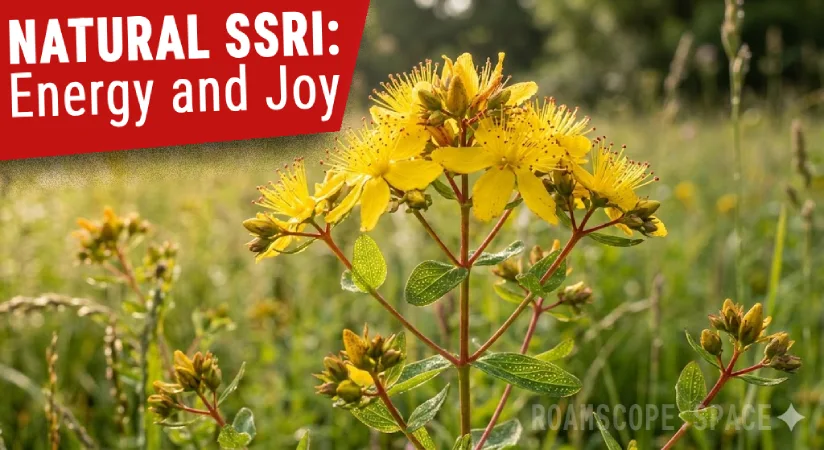
St. John’s Wort: Sunlight in Every Drop. A Comprehensive Guide to Biochemistry, Herbalism, and Usage Culture.
1. Ancestral Heritage and the Digital Age: Why We Return to Our Roots
Imagine a vast, endless June meadow. The air shimmers with heat, bees buzz over the flowers, and in the very heart of the grass, bright yellow flowers, like small suns, bloom. This is St. John’s Wort (Hypericum perforatum). Our ancestors, living in harmony with the rhythms of nature, considered it the primary protector of man. Ancient village legends claimed this plant could drive away not only physical ailments but also “spiritual darkness.”
Today, in 2026, as we are surrounded by artificial intelligence and complex technologies, interest in such natural phenomena is not fading but growing. Why? Because our body is a complex biological machine that, over millions of years of evolution, has learned to recognize natural molecules better than synthetic compounds. This article is the result of a large-scale study of open sources, the works of modern nutritionists such as Dr. Eric Berg, and centuries of traditional medicine experience. The author prepared this review primarily for himself to structure knowledge and understand how this folk remedy can help in the face of modern stress.
2. Important Author’s Disclaimer
Attention! This material is for informational and educational purposes only. The author is a layman sharing the results of a personal search on the Internet and an analysis of Dr. Berg’s video materials.
St. John’s Wort is not a medicinal drug in the legal sense. It is an active folk remedy that is not suitable for everyone. It has a powerful effect on the biochemistry of the liver and brain. It is strictly recommended not to start using St. John’s Wort without prior consultation with a professional specialist, especially if you are already taking any pharmaceutical drugs. The author is not responsible for the consequences of the independent application of the described methods. Information is collected for personal use and self-education.
3. A Wide Range of Applications: What Does the “Sun Herb” Help With?
Before delving into botany, let’s outline the conditions where St. John’s Wort is traditionally used in folk practice. It is not a panacea, but the list of states where its properties may be useful is impressive:
- Psycho-emotional Sphere: Constant blues, seasonal apathy (especially during autumn and winter), feelings of causeless anxiety, loss of strength, and lack of desire to engage in daily activities.
- Energy and Sleep: Chronic daytime sleepiness where even after a long sleep, a person feels “broken,” and difficulty concentrating while learning or working.
- Delicate Problems: Inflammatory processes in the rectum, fissures, and discomfort associated with hemorrhoids (external application).
- Skin Conditions: Minor wounds, erosions, burns (in the healing stage) where antiseptic support is required.
- Digestion: Mild gastrointestinal discomfort requiring an astringent effect.
4. Plant Anatomy: Leaves, Flowers, or Stems?
A common question is: what exactly do we put in the teapot? Let’s break down the structure of St. John’s Wort and the value of its parts.
- Flowers: This is the plant’s “gold fund.” The highest concentration of hypericin is found in the petals and buds. If you want the antidepressant effect, flowers should form the basis of your harvest.
- Leaves: Can they be taken? The answer is yes, and it is necessary. St. John’s Wort leaves are rich in tannins, flavonoids, and vitamins (C, P, carotene). While they don’t have the same “psychotropic” power as the flowers, the leaves are responsible for the anti-inflammatory and astringent effects crucial for hemorrhoids or stomach issues. When brewing, we use a mixture of both flowers and leaves.
- The Stem: The upper part of the stem (soft and green) is also used. However, the lower, woody parts should be avoided as they contain few nutrients and add an unpleasant “woody” aftertaste to the infusion.
The Secret of the “Perforations”: If you look at a St. John’s Wort leaf against the light, it appears to be riddled with tiny holes. In reality, these are transparent glands filled with essential oil. Nature has hidden the plant’s power within these micro-capsules.
5. Biochemistry of Joy: St. John’s Wort as a Natural SSRI
To understand how St. John’s Wort fights sleepiness and the blues, we must look deep into the brain at the neuronal level. Dr. Eric Berg often explains this through the concept of neurotransmitters.
In our brain, there are billions of nerve cells — neurons. Between them are microscopic gaps called synapses. To transmit a signal (e.g., joy or calmness), one neuron releases a portion of serotonin. After the signal is sent, the body usually initiates “reuptake” — pulling the leftover serotonin back into the cell.
During periods of blues or depressive states, there is either too little serotonin in the gap or it disappears too quickly. St. John’s Wort acts as a natural SSRI (Selective Serotonin Reuptake Inhibitor). It blocks this “return,” allowing the joy hormone to stay in the active zone longer. As a result:
- Nerve impulse transmission improves.
- Anxiety levels decrease.
- “Brain fog” and daytime sleepiness gradually fade.
6. Hidden Threats: Photosensitization and Eyes
St. John’s Wort is called the “sun herb” for a reason — it has a complex relationship with sunlight. The main active ingredient, hypericin, possesses photodynamic activity.
What does this mean in practice?
When you take St. John’s Wort internally or use its oil externally, your skin becomes hypersensitive to ultraviolet rays. However, few realize that sensitivity also increases in the retina of the eyes.
- Burn Risk: Even a short stay in the sun can lead to skin redness and burns that you wouldn’t normally get.
- Eye Protection: If you are taking a course of St. John’s Wort, always wear high-quality sunglasses in sunny weather. Bright light can cause discomfort or even retinal damage due to increased light sensitivity.
- Pigmentation: There is an increased risk of age spots that are extremely difficult to remove later.
7. Brewing Culture: A Step-by-Step Instruction
To ensure St. John’s Wort releases its properties effectively, it must be prepared correctly.
- Dosage: Sources most often suggest 1 tablespoon of dried herb (flowers + leaves) per 250–300 ml of water.
- Water: Use water at a temperature of 85–90°C. If you pour boiling water directly, you risk “scalding” the vitamins and destroying some essential compounds.
- Steeping: Let it steep for at least 20–30 minutes. The infusion should become rich, ranging from amber to a deep reddish-brown.
Frequency and Schedule of Intake:
- How many times a day: It is recommended to drink the infusion 2–3 times a day in equal portions (approx. 100–150 ml per serving).
- Connection with food: Best taken 30 minutes before a meal.
- Time of day: Primarily morning and lunch. Avoid drinking it in the evening, as the stimulating effect can lead to insomnia.
- Course: Usually 3–4 weeks.
- Breaks: This is vital! St. John’s Wort should not be taken constantly. After a month of use, a break of at least one month is required. Herbalists recommend conducting such cycles no more than 2–3 times a year, for example, during peak periods of blues (Oct-Nov and Mar-Apr).
8. Compatibility: Can You Drink St. John’s Wort and Turmeric?
Those practicing a holistic approach often ask if these two can be combined. Turmeric is a powerful anti-inflammatory, while St. John’s Wort is neuroprotective.
Experts’ and Naturopaths’ Opinion:
You can drink both on the same day, but do not mix them in the same glass.
- Take St. John’s Wort in the first half of the day for energy.
- Save Turmeric (e.g., “Golden Milk” or tea with black pepper) for the afternoon or evening, as it has a gentle calming effect on tissues.
- Crucial Note: Both affect the liver. If you combine them, listen to your body closely. If you feel heaviness in the right side, it’s better to separate them into different courses.
9. Hemorrhoids: Warm Baths and the Magical “Red Oil”
For those seeking relief from hemorrhoids, St. John’s Wort offers powerful local action. The tannins (abundant in the leaves) help constrict blood vessels and regenerate tissue.
Warm Sitz Bath Method:
Brew 3 tablespoons of the herb in a liter of water; let it steep for 40 minutes. Strain and add to a basin. Remember the temperature: 37–38°C (98-100°F). Sitting in this bath for 15 minutes is an excellent way to relieve inflammation and itching.
“Red Oil” Recipe (Traditional Herbalist Method):
This oil is a unique remedy for healing fissures.
- Take a glass jar and pack it tightly with fresh St. John’s Wort flowers.
- Cover with oil. The ideal choice is extra virgin olive oil (which heals on its own), but high-quality sunflower oil works too.
- Place the jar on a sunny windowsill for 3 weeks. Sunlight activates the hypericin, turning the oil a bright blood-red.
- Strain through cheesecloth and store in a dark bottle in the refrigerator. Apply to affected areas 2–3 times a day.
10. Harvesting and Storage: Quality Secrets
In folk tradition, the peak of power is around June 24th (St. John’s Day). Only the tops with flowers should be harvested.
Dry in the shade in a well-ventilated area. If dried in direct sun, the cut herb quickly loses its active properties. Store in glass jars or paper bags for no more than 2 years.
Important Update: Exercise Extreme Caution
As I mentioned earlier in this article, combining St. John’s Wort with many medications is not recommended. However, the scope of potential risks is much broader.
In my next article, I will attempt to list the specific substances and conditions with which St. John’s Wort is either discouraged or strictly prohibited, according to the data I have gathered online. I also plan to detail the possible consequences of such combinations so you can have a complete understanding of the risks involved.
I urge you to be extremely careful with this plant. This is especially true for those taking any medications, and even more so for those who consume alcohol (I will dedicate a separate, in-depth analysis to the highly dangerous combination of St. John’s Wort and alcohol).
As stated in the disclaimer above: before deciding to start a course of St. John’s Wort, it is mandatory (!) to consult a physician, preferably your primary care doctor. St. John’s Wort is a very potent natural agent. Please be exceptionally cautious with it.
Conclusion: Summary
St. John’s Wort is a complex and powerful tool gifted by nature. For someone facing blues, sleepiness, or hemorrhoids, it can be a reliable support if approached with wisdom and caution. It is not “just a tea,” but a biologically active substance requiring discipline and respect for usage rules.
Gratitude and Author Support
This article is the result of my personal quest to understand how nature and biochemistry can help us become more effective and balanced. If you found this material helpful, you can support me in two simple ways:
Share the link: Mention this article on your social media or send it to a friend who is currently low on energy. It’s the best way to help these insights reach those who need them.
Support my personal growth: If you wish to show financial gratitude, you can send any amount toward my personal development. These funds help me cover my tuition, acquire essential tools for coding, and continue my self-education journey. Every bit of your support is an investment in my personal progress.



 Support our blog! Buy us a coffee, and we'll show you the world! ☕🌍 We need your help! Even a small amount will help us continue to delight you with interesting travel articles. Thank you for your support! 💖